10/13/2025
How Project Managers Evolve — and Why Some Career Paths Just Feel “Natural”
Project managers evolve through stages shaped by personality, experience, and soft skills, growing from disciplined executors to strategic leaders who manage both projects and people. Growth often comes from stepping beyond comfort zones.
Prefer to listen?
YouTube: Open on YouTube
How Project Managers Evolve — and Why Some Career Paths Just Feel “Natural”
Thank you to everyone who read, commented, and shared my last article, The Five Archetypes of Project Managers. Your reflections were incredible.
Many of you said, “I see myself in more than one archetype,” or “I started as one and grew into another.” You’re absolutely right.
Because project management isn’t a static role. It’s a career of evolution—shaped by environment, experience, and personality.
So today, I want to explore how PMs evolve—and why certain career paths just feel natural for some of us.
The Evolution of a Project Manager
When I look back at my 18-year career as a project manager, I can clearly see how my role—and my focus—have evolved. And observing others I’ve worked with, I’ve noticed the same pattern.
No two journeys look exactly alike. But most project managers follow a familiar progression—an evolution of mindset, not just title.
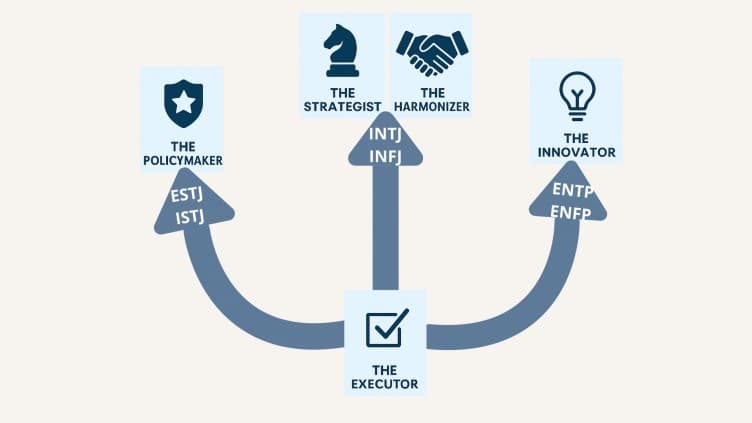
Early-Career: The Executor
In the early years, most PMs lean on structure, discipline, and rigor. They master frameworks, track deliverables, and focus on ensuring things get done the right way.
That discipline builds a foundation of credibility. But it also comes with its limits: navigating ambiguity, managing politics, and influencing without authority don’t come naturally yet.
Personality-wise, this stage feels comfortable for ISTJ and ESTJ types—those who value order, clarity, and precision. But for intuitive types like INTJs or ENTPs, it can feel restrictive. They sense there’s more beyond the checklist.
Mid-Career: The Strategist or Harmonizer
Once you’ve mastered delivery, the next leap is from managing projects to leading people and influencing outcomes.
This is where many PMs evolve into Strategists or Harmonizers. They’ve built their discipline. Now they start leaning into intuition, communication, and trust.
They focus on connecting the what (the project goals) to the why (the business impact). They learn to read the room. They shift from command-and-control to coach-and-influence.
For INTJs and ENTJs, this evolution feels natural—they see the big picture easily. For INFJs or ISFJs, Harmonizer roles feel aligned—they thrive on empathy and collaboration.
But both archetypes share one challenge: balancing process with adaptability and trust with accountability.
Others Evolve into Policymakers
Some PMs evolve in a different direction—toward governance and oversight. They become Policymakers (or “Enforcers”).
They move from delivery to assurance—creating structure at scale. You’ll find them leading PMOs, managing audits, or defining enterprise standards.
They ensure not only that projects succeed—but that the system itself works.
This evolution often feels natural to ESTJ types who value clarity, authority, and consistency. Their growth edge? Balancing rules with results—so governance enables rather than constrains.
And Then There Are the Innovators
Some PMs go the opposite direction: toward innovation and ambiguity. They become Agile Builders, Product Managers, or Transformation Leads.
They thrive in fast-moving environments where frameworks take a back seat to experimentation.
ENFPs and ENTPs tend to love this space. They connect ideas, pivot fast, and inspire creativity.
But they also risk burnout or inconsistency without a dose of Executor discipline.
Why Personality Shapes Evolution
Your Myers-Briggs profile can offer clues about why certain paths feel “natural.” It’s not about boxing yourself in—it’s about understanding your tendencies.
Of course, no archetype excludes anyone. Your personality only influences what feels most natural to you.
If you’re structured and detail-oriented, you’ll likely start as an Executor.
If you’re visionary and intuitive, you may jump straight into Strategist territory.
If you’re empathetic and people-centric, Harmonizer roles will feel rewarding.
And sometimes, the roles that feel uncomfortable are where your growth lies.
Because evolution often happens in discomfort—not in familiarity.
Key takeaway: Project managers evolve through stages shaped by personality and experience, but meaningful growth often comes from stepping outside your comfort zone.
The New Differentiator: Soft Skills
Ten years ago, success in project management was measured by delivery: on-time, on-budget, on-scope.
Today, that’s only the baseline. The true differentiators are soft skills—what PMI call “power skills”:
- Emotional intelligence
- Stakeholder influence
- Strategic framing
- Conflict navigation
- Adaptability under change
As AI and automation handle more of the “tracking,” human PMs who lead with empathy, clarity, and strategic thinking will rise.
Because leadership is no longer about managing the plan—it’s about managing the energy behind the plan.
Introverts vs. Extroverts in the PM Journey
This evolution feels different depending on your wiring.
For introverts:
- Growth comes from stepping into visibility.
- Speaking up early.
- Owning the narrative before others define it. You don’t need to talk louder—you just need to talk sooner.
For extroverts:
- Growth comes from slowing down.
- Listening deeper.
- Creating space for others to contribute. Charisma builds momentum—but reflection sustains it.
Both can lead with quiet strength when they know themselves and their team.
Final Thought
Every project changes you. Every environment reveals a different side of your leadership.
So if your path has evolved—or feels like it’s about to—embrace it.
That evolution isn’t a sign of inconsistency. It’s a sign of growth.
Because project management isn’t just about managing scope or schedules—it’s about managing your own evolution as a leader.
So, what about you?
How has your PM style evolved—and where do you see yourself heading next?
Try this: Reflect on your Myers-Briggs profile and current PM style. Notice where you feel natural—and where discomfort signals opportunity for growth.