11/4/2025
Turning Pressure into Momentum — Not Fear
Pressure is inevitable, but how we perceive and respond to it shapes our outcomes. Intentional leadership and self-awareness can turn pressure into momentum, driving progress and building trust under high-stakes conditions.
Prefer to listen?
YouTube: Open on YouTube
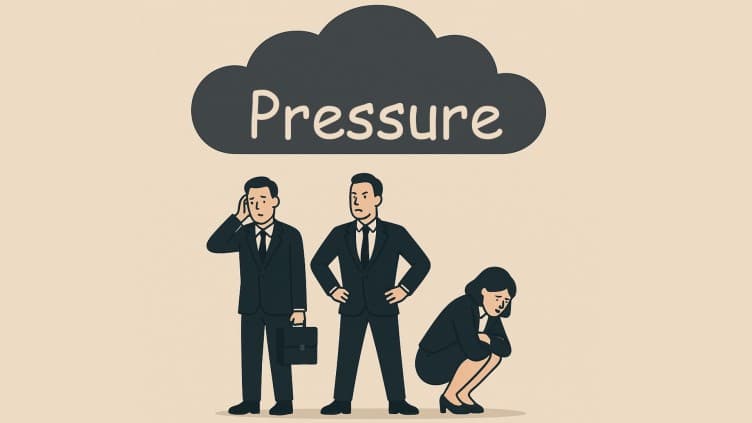
Can you remember a day when the pressure was on — the clock ticking, deadlines looming, and expectations sky-high?
That moment when everything felt urgent, and you weren’t just managing tasks — you were managing yourself?
I’ve been there recently.
The project is one of those rare, high-stakes initiatives: tight deadlines, high expectations, and the excitement (and anxiety) of breaking new ground.
There’s something thrilling about pioneering a first-of-its-kind effort.
But that thrill also brings its shadows — ambiguity, unknowns, and the constant hum of uncertainty.
To dominate a new field, we have to move fast.
The team knows it. Everyone’s committed.
But the runway? It’s short — and nowhere near smooth.
We went from learning to owning the full scope in weeks, not months.
And during that steep climb, I noticed something fascinating:
Under the same conditions — the same pressure — people reacted very differently.
Some turned the pressure into momentum.
Some went quiet.
And others turned that same pressure into fear.
So what makes the difference?
How We Perceive Pressure Shapes How We Respond
Pressure itself isn’t the problem.
It’s how we perceive it.
When the stakes rise, our minds naturally start asking questions — often subconsciously:
“What does this mean for me?”
“Will I fail?”
“Am I still in control?”
“What if I can’t keep up?”
Those internal questions define our emotional response.
Some people view pressure as a challenge — a signal to focus, to perform, to rise.
Others interpret it as a threat — something that might expose weakness, risk reputation, or reveal inadequacy.
That perception gap explains why the same situation can ignite momentum in one person and trigger fear in another.
When fear dominates, it narrows perspective.
We fixate on risk, not opportunity.
We hold back ideas.
We go quiet.
We play small.
But when we shift perspective — when we view pressure as information, not judgment — it becomes fuel.
It sharpens focus.
It pushes us to adapt and create momentum.
So What Can We Do About It?
Pressure isn’t going away. It’s part of every leadership journey — every ambitious project, every major goal.
But pressure can be redirected.
With awareness and the right mindset, it becomes a force for progress instead of paralysis.
Here’s how.
1. Personality Shapes How We Experience Pressure
Not everyone processes pressure the same way.
- Extroverts tend to talk it out — they externalize stress, brainstorm, and get energy through discussion.
- Introverts process inwardly — they analyze, reflect, and need quiet to regain control before taking action.
Here’s where it gets tricky:
When introverts get quiet under pressure, others may misread it as disengagement.
When extroverts stay vocal, others might assume they’re unfazed — when they may be overcompensating.
The goal isn’t to change who you are.
It’s to understand your natural pattern — and manage it intentionally.
If you’re an introvert, use quiet reflection to ground yourself, but don’t disappear.
Share progress updates early — even small ones — to show visibility and build trust.
If you’re an extrovert, slow down enough to listen before reacting.
Pausing doesn’t mean hesitation; it means precision.
When you work with your wiring instead of against it, pressure becomes a catalyst — not a constraint.
2. Leadership Can Turn Pressure into Empowerment
Pressure by itself isn’t toxic — unmanaged pressure is.
The difference comes down to leadership.
When leaders empower teams, clarify priorities, and create psychological safety, pressure transforms into focus.
But when leaders stay reactive or unclear, that same pressure turns into anxiety.
In high-stakes environments, clarity is oxygen.
Even if you don’t have all the answers, being transparent about what’s known, what’s unknown, and what’s next — gives people a foothold.
It turns chaos into motion.
3. Focus on Progress, Not the End Goal
When pressure mounts, the mind zooms in on the mountain — not the next step.
That’s when overwhelm hits.
The best way to stay grounded is to shift your focus from outcome to progress.
Ask yourself:
“What’s the one decision that moves us forward today?”
“What’s one piece of uncertainty I can resolve right now?”
Small wins create traction.
Traction builds confidence.
And confidence turns pressure into momentum.
4. Pressure Creates Visibility
Here’s the twist many overlook: Pressure isn’t just a test — it’s a spotlight.
During critical moments, your actions, words, and tone carry weight.
They show others who you are when it matters most.
Visibility isn’t only about results — it’s about consistency.
When people see that you stay steady and solutions-focused under pressure, they remember.
And when results follow, they connect your name to trust, reliability, and leadership.
That’s how pressure quietly shapes reputation.
That’s how visibility begins — not from self-promotion, but from showing up when it counts.
Final Thought
Every project has that moment — the one that feels make-or-break.
When the deadlines are closing in, the pressure is peaking, and every decision matters.
That’s when leadership isn’t about title or status.
It’s about composure, clarity, and courage.
Pressure doesn’t define you.
Your response does.
So the next time you feel the weight closing in, pause — and ask yourself:
“Can I turn this pressure into progress?”
Because when you do — you don’t just survive the moment.
You create momentum.
You earn visibility.
And you grow stronger as a leader.
Key takeaway: Pressure is inevitable, but your perception and response determine whether it becomes momentum or fear. Understanding your personality and practicing intentional leadership can transform pressure into a powerful force for progress and visibility.
✨ Thanks for reading! If this resonated with you, here are more resources you might enjoy:
📩 Subscribe to the Introverted Leadership Newsletter.
🎙️ Listen to the Introverted Leadership Podcast on YouTube.
📥 Download the free guide: 5 Strategies to Lead with Confidence at ProjectScenarios.com.
📚 Explore the Introvert Leader’s 4C Decision-Making Framework on Kindle.
💬 Comment below — how do you personally handle pressure? Do you channel it into focus or feel it weigh you down?
Please share this with others who might benefit from it.
Until next time, lead quietly, but confidently.